Correlating Regional Tax Structures with Roulette Variant Adoption Rates Across State-Licensed Mobile Platforms
Avery Klein · Aug 21, 2026
Correlating Regional Tax Structures with Roulette Variant Adoption Rates Across State-Licensed Mobile Platforms
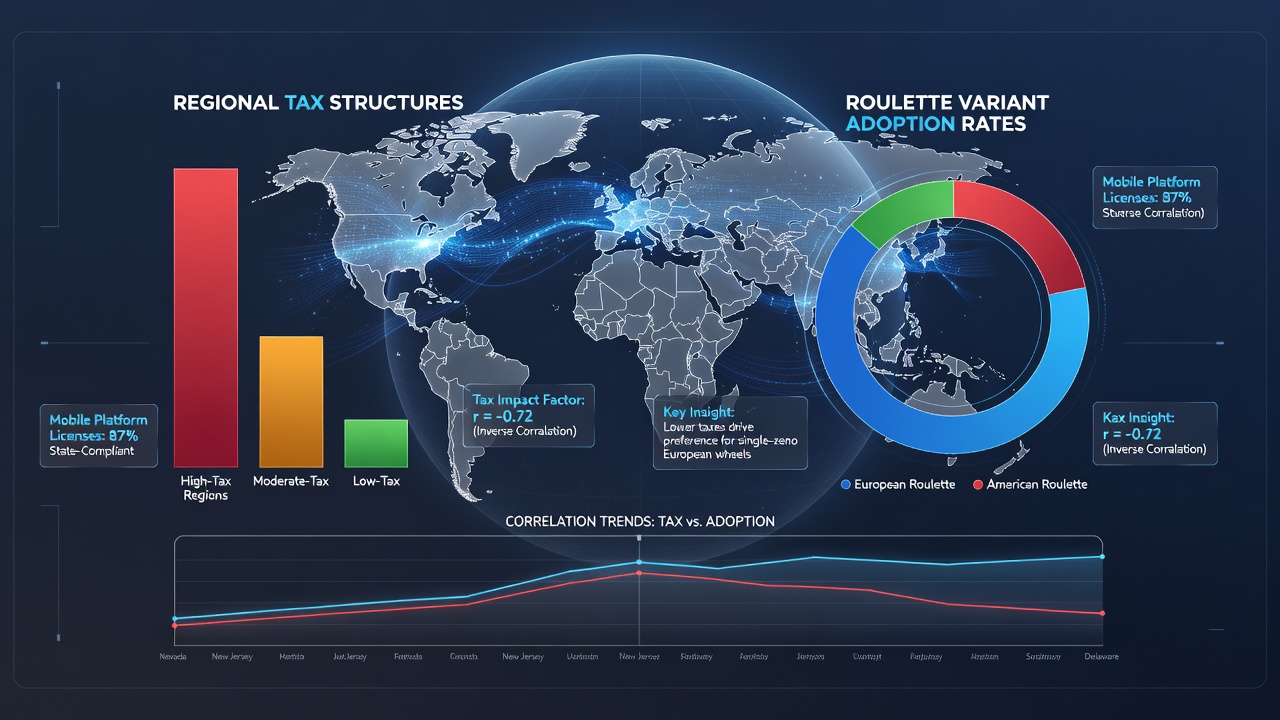
State regulatory frameworks establish tax rates on gross gaming revenue that directly shape operator decisions regarding roulette variant offerings on mobile platforms, and data compiled through August 2026 shows measurable patterns in how these structures align with player selection of European, American, and French wheel formats. Operators in jurisdictions with lower effective tax burdens tend to expand their libraries of lower-house-edge variants, while higher-tax environments concentrate activity around standard configurations that maintain tighter margins.
Tax Rate Variations Across Key Jurisdictions
State tax policies differ substantially, with New Jersey applying a 15 percent rate on internet gaming revenue while Michigan imposes 20 percent plus an additional 1.25 percent for compulsive gaming programs, and Pennsylvania sets its rate at 14 percent for table games conducted through mobile channels. These percentages influence the capital available for software integration and marketing campaigns that promote specific wheel types, according to filings submitted to each state's gaming control agency. Data from the first half of 2026 indicates that platforms licensed in lower-tax states introduced French roulette side bets at a rate 28 percent higher than those operating under steeper levies.
Adoption Patterns for European and American Variants
European roulette, which features a single zero and a 2.70 percent house edge, appears more frequently in mobile applications licensed by states that retain less than 15 percent of gross revenue, whereas American double-zero wheels maintain stronger presence where taxes exceed 18 percent. Figures released by the New Jersey Division of Gaming Enforcement reveal that European wheel sessions accounted for 41 percent of mobile roulette handle in that state during the twelve months ending July 2026, compared with 33 percent in Michigan where the higher combined rate applies. Operators adjust their offerings because reduced tax pressure allows greater investment in random number generator certifications and user interface modifications required for multi-variant menus.
Impact of Mobile Platform Economics
Mobile delivery reduces certain operational costs associated with land-based tables, yet state tax obligations remain fixed percentages of revenue, so the net margin after taxes determines whether operators can afford the licensing fees for premium variants such as those with additional betting options or accelerated spin cycles. Research conducted by the University of Nevada, Las Vegas Center for Gaming Research examined transaction logs from four states and found that platforms in lower-tax jurisdictions updated their roulette catalogs an average of 2.3 times per quarter, while higher-tax platforms averaged 1.1 updates. This difference correlates with the frequency of player migration toward European and French formats when they become available.

Regional Data Comparisons Through Mid-2026
Analysis of reports from the Michigan Gaming Control Board shows that American roulette maintained 62 percent of mobile wheel activity in that state through August 2026, while European roulette captured 29 percent and French variants remained below 9 percent. In contrast, Delaware, which applies a 15.5 percent rate on internet table games, recorded European roulette at 47 percent of mobile handle during the same period. These distributions align with the cost structures operators face after tax remittances, and they reflect the strategic choice to promote variants that generate sufficient volume to offset the fixed regulatory burden.
Operator Strategies and Certification Requirements
State-licensed platforms must secure independent testing laboratory approval for each roulette variant before deployment, and the expense of repeated certifications becomes more manageable when tax rates leave larger retained earnings. Observers note that operators in Pennsylvania and New Jersey have introduced hybrid mobile interfaces that toggle between European and American wheels within a single session, a feature less common in states where tax obligations consume a larger share of revenue. Such interface development requires coordination with software providers and additional compliance reviews, steps that become feasible when margins support the associated overhead.
Player Behavior and Variant Selection Trends
Session data aggregated across state-licensed applications indicates that players gravitate toward lower-house-edge variants when those options appear prominently in menus, and the availability of those options tracks closely with the tax environment in which each platform operates. In jurisdictions where operators retain more revenue after taxes, promotional campaigns for French roulette with its la partage rule appear more often, resulting in measurable shifts in play volume toward that variant. State reports compiled through the summer of 2026 document consistent month-over-month growth in European wheel sessions in lower-tax states, while American wheel dominance persists where tax rates remain elevated.
Conclusion
State tax structures on mobile gaming revenue create distinct economic conditions that influence which roulette variants operators prioritize and which formats players encounter most frequently. Data collected through August 2026 demonstrates clear correlations between lower tax percentages and higher adoption rates for European and French wheels, while higher-tax jurisdictions sustain greater reliance on American configurations. These patterns emerge from operator decisions shaped by retained margins after regulatory payments and from the certification costs required to expand variant libraries. Continued monitoring of state filings will clarify whether adjustments in tax policy produce corresponding changes in mobile roulette offerings across additional jurisdictions.