14 Jun 2026
Mapping Regulatory Shifts in Free Play Credit Allocation Across Online Table Game Networks
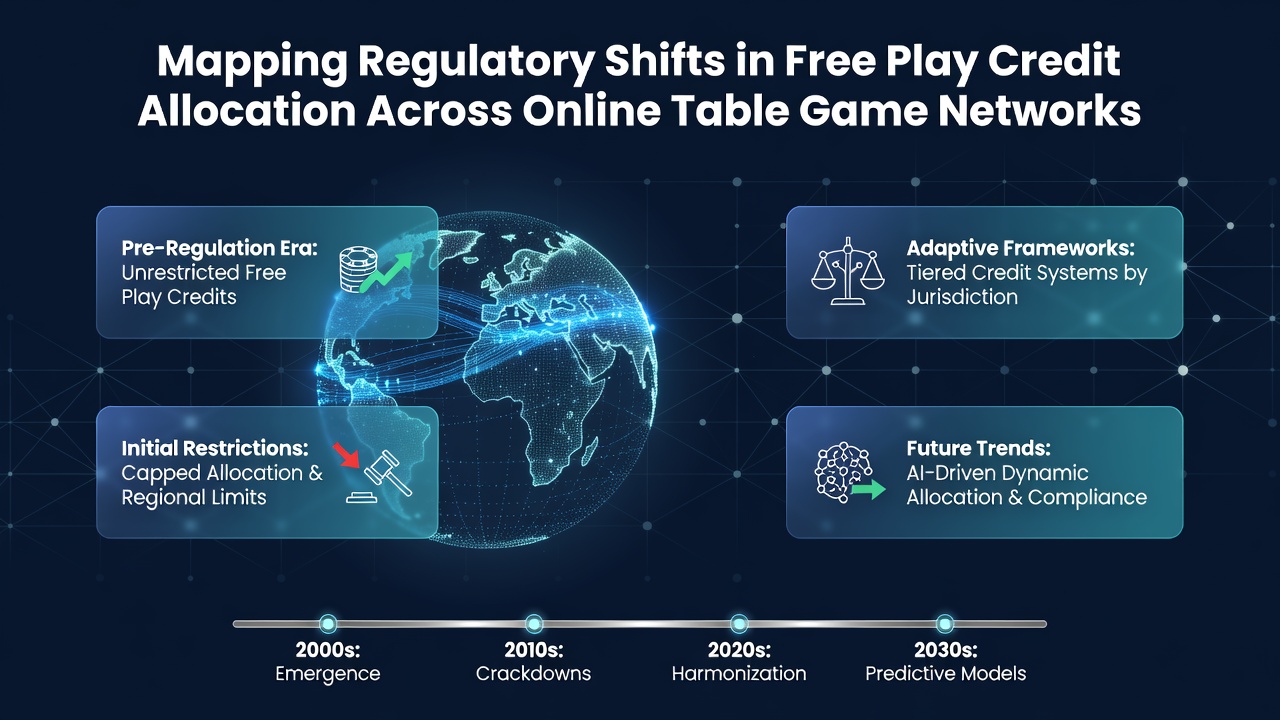
Regulatory bodies across multiple jurisdictions have begun adjusting how free play credits reach players in online table game environments, and these changes affect blackjack, roulette, and baccarat networks that operate across state and national borders. Data compiled through mid-2026 shows several regions moving away from uniform credit pools toward systems that tie allocations to verified play history and platform compliance scores.
Observers note that the adjustments often stem from efforts to balance player retention metrics with stricter responsible gaming parameters. In practice this means operators must recalibrate their distribution algorithms whenever new reporting thresholds take effect, particularly when networks span multiple licensing authorities.
Allocation Framework Updates in Key Markets
North American regulators have introduced tiered verification steps that require operators to log every credit grant against individual account activity before release. This approach replaces earlier blanket distribution models that allowed bulk uploads without per-session reconciliation. Figures from the New Jersey Division of Gaming Enforcement indicate that credit utilization reports must now arrive within 24 hours of each allocation cycle, shortening the previous 72-hour window.
European platforms face parallel requirements through the European Gaming and Betting Association guidelines, which emphasize cross-border data sharing so that credits issued in one member state appear in centralized ledgers accessible to others. The result limits duplicate claims while preserving player mobility across licensed sites.
Technical Adjustments Operators Must Implement
Software providers have rolled out updated APIs that embed real-time compliance flags directly into the credit issuance sequence. These flags check regulatory status, account age, and recent wager volume before any credit balance appears in the player interface. One mid-sized operator reported completing its full network migration by April 2026, after which internal audits showed a 17 percent reduction in manual reconciliation tasks.
Table game networks that aggregate traffic from several operators now route allocation requests through a shared validation layer. This layer applies jurisdiction-specific rules in sequence, so a single credit request may pass through filters for both the originating state and the player's current location before approval.
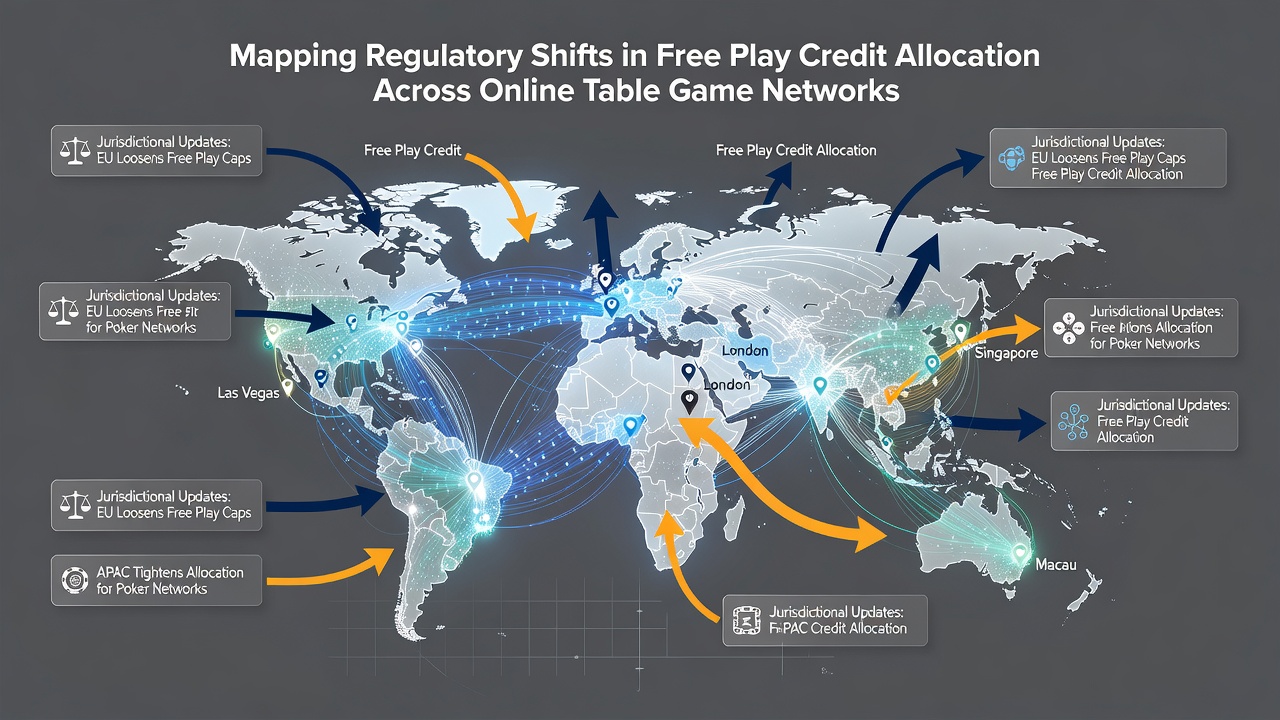
June 2026 marks the date when several Canadian provincial frameworks require these layered checks to extend to live dealer streams as well as RNG tables. Operators serving iGaming Ontario markets have already begun testing the expanded protocols in staging environments.
Cross-Jurisdictional Data Exchange Patterns
Information sharing agreements now cover credit redemption histories, allowing regulators to flag accounts that accumulate credits faster than their reported play volume would support. The agreements operate on encrypted channels that strip personally identifiable information before transmission, satisfying privacy statutes in both sending and receiving jurisdictions.
Industry reports compiled by academic research teams at the University of Nevada, Las Vegas document how these exchanges have altered credit lifespan. Credits issued under the new rules show shorter average active periods before expiration, because reconciliation processes automatically void unused balances once verification windows close.
Impact on Network-Level Reporting
Consolidated reporting portals have emerged to handle the increased data volume. These portals accept standardized files that list every credit grant, redemption, and forfeiture event across all connected table game titles. Regulators in multiple regions now require monthly submissions rather than quarterly ones, compressing the feedback loop between operators and oversight bodies.
Network administrators have responded by embedding audit trails at the point of credit generation, so each transaction carries immutable metadata that satisfies both current and anticipated future rules. This architecture reduces the need for retroactive data reconstruction when new reporting mandates appear.
Conclusion
The regulatory landscape for free play credit allocation continues to evolve through incremental technical and procedural refinements rather than wholesale overhauls. Operators maintaining table game networks must monitor these layered requirements across jurisdictions to keep allocation systems aligned with the latest verification standards. Data exchange mechanisms and automated compliance layers now form the core infrastructure supporting these shifts, with further adjustments scheduled through the remainder of 2026.